Worde: Daily & Unlimited
ViralMedia-MLMWord
4.3743.00 Reviews
- Version
- 2.1.13
- Installs
- 500.00K
- Age Rating
- Everyone
Screenshots
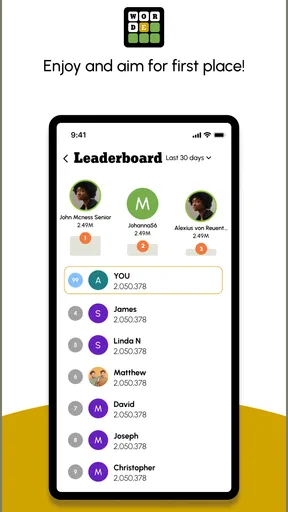
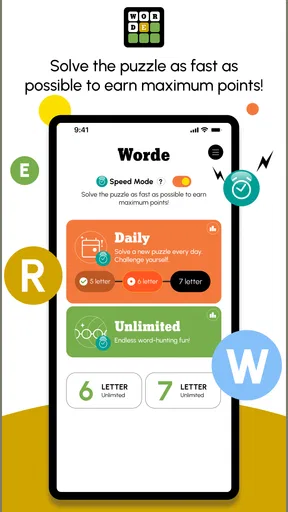
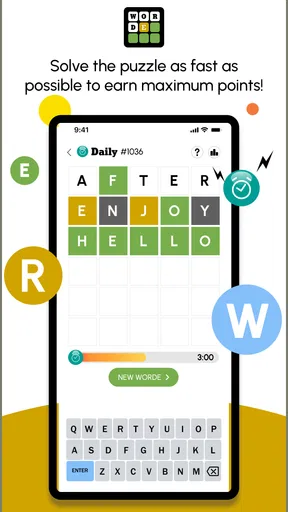
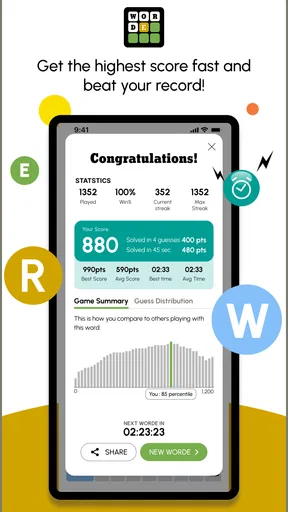
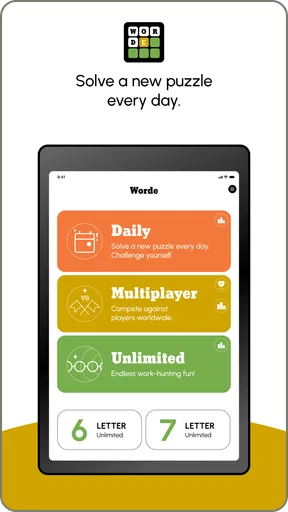
Our Review of Worde: Daily & Unlimited
 Analysis by Appyee
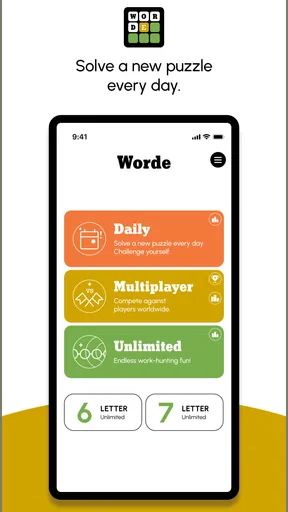
I spent time with Worde: Daily & Unlimited as a compact word game for short breaks, and its appeal is easy to understand. It takes the familiar hidden-word format and gives it several ways to play: a daily challenge, unlimited rounds, and multiplayer options, with six- and seven-letter words in the mix. That makes it more flexible than a game built around one puzzle per day, although that flexibility also changes the rhythm that makes daily word games so satisfying.
At its core, this is a free word game from ViralMedia-MLM. It is rated for Everyone, so it is suitable for a broad audience, and it runs on Android devices using version 7.0 or later. The current release is 2.1.13. I would describe it as an easy game to pick up rather than a deep vocabulary trainer: the rules are familiar, the rounds are brief, and most of the enjoyment comes from choosing guesses carefully instead of learning a complicated interface.
How the free access affects its value
The most important cost detail is straightforward: Worde: Daily & Unlimited can be installed for free. That makes it easy to try without committing money first, which is exactly what I want from a casual puzzle. The game also includes optional in-app purchases ranging from $0.49 to $45.44 per item. Because those purchases sit alongside free access, I would treat the paid side as something to inspect before spending, not as a reason to assume the basic game is locked behind a purchase.
That distinction matters. A free download is valuable when the unpaid experience already gives you enough reason to return. In my view, the daily mode provides the clearest routine: open the game, work through a single focused puzzle, and leave with the feeling that you have completed something. Unlimited play serves a different purpose. It is useful when you want several rounds during a commute, while waiting for an appointment, or when one puzzle simply was not enough.
I would not judge the optional purchases by their headline price alone. A small purchase may feel reasonable to someone who plays every day, while a larger item needs a much stronger benefit to justify it. Since the game is usable without an upfront payment, my advice is to play the free modes for several sessions first. If the daily and unlimited formats already fit your routine, there is no urgent reason to buy anything. If you are considering a purchase, check exactly what it changes in the current app before confirming it.
There is also a practical advantage to this approach: you can compare the game with other word puzzles without paying for a trial period. Many people already have a preferred daily word game, a crossword app, or a collection of offline puzzles. Worde has to earn a place beside those alternatives through convenience and variety, not simply through the fact that it is free to install.
The daily mode is best for a steady habit
The daily format is the part I found easiest to recommend to someone who likes a small mental ritual. It gives the game a natural stopping point, which prevents the experience from becoming an endless sequence of guesses. I can imagine using it with morning coffee or during an evening wind-down: one puzzle, a little concentration, then move on.
The daily mode also creates a useful discipline around guessing. Because you are not immediately jumping into another round, each attempt feels more deliberate. I found myself considering common letter patterns, possible endings, and which letters had already been ruled out instead of throwing in random words. That is a small but meaningful difference from unlimited play, where it is easy to chase a solution quickly and start treating guesses as disposable.
For families, the Everyone rating makes the game approachable, but younger players may still need help with unfamiliar vocabulary. A child who knows the rules may not know enough words to make every round feel fair, while an adult may find the same puzzle comfortably manageable. That is not a flaw unique to this title; it is a normal trade-off in word games. The practical solution is to play together and discuss why a guess is useful, rather than treating every failed round as a test of intelligence.
Unlimited play changes the experience
Unlimited mode is the stronger choice when you want volume. If you have ten minutes to fill, a single daily puzzle can feel too brief, and unlimited rounds remove that artificial limit. This is especially useful for people who enjoy experimenting with opening guesses and testing different approaches. You can play again soon after finishing instead of waiting for the next daily opportunity.
The trade-off is that unlimited access can reduce the sense of occasion. A daily puzzle becomes part of a routine because it is finite; unlimited rounds are more like a puzzle box you can keep opening. I enjoyed that freedom, but I also found it easier to stop caring about a particular round. When a guess went badly, starting over with another puzzle was tempting. Players who prefer a calm, measured challenge may get more satisfaction from the daily mode, while players who want repetition and practice will probably value unlimited play more.
A useful personal strategy is to separate the two modes. I would use daily mode when I want a focused challenge and unlimited mode when I am actively practicing. In unlimited play, try a consistent opening method for several rounds rather than changing everything after one failure. That makes the extra games more informative: you begin to notice whether your first guesses reveal useful letters or merely repeat common patterns.
Six-letter and seven-letter words add a real choice
The inclusion of six- and seven-letter words gives the game more range than a single fixed word length. Longer words can make the puzzle feel more demanding because there are more positions to manage, but they can also provide more information when a guess reveals several letters. The result is not simply “longer means harder.” A familiar seven-letter word may be easier than an obscure six-letter one, while a word with repeated letters can create a very different problem from one with mostly distinct letters.
I recommend treating the word length as part of your mood selection. Choose the shorter option when you want a quick confidence boost or when you are playing with someone who is new to this style of puzzle. Choose the longer option when you want to slow down and reason through patterns. That flexibility is one of the more useful parts of the game because it lets the same app serve a casual player and a more committed word-game fan without requiring separate downloads.
One technique that helped me with longer words was to avoid filling every turn with a guess that merely “looks possible.” Instead, I used guesses to test several untried letters at once, then narrowed the answer based on position and letter presence. This is not a special feature of the app, but the six- and seven-letter formats make the approach particularly worthwhile. Unlimited mode is a good place to practice it without putting pressure on the daily round.
Where Worde fits among familiar word-game alternatives
Compared with a traditional crossword, Worde: Daily & Unlimited is quicker to learn and less dependent on reading a clue correctly. A crossword rewards broad knowledge across many subjects and usually asks you to move between answers. Here, the focus is narrower: infer one hidden word through feedback from your guesses. I prefer Worde when I want a short, self-contained challenge; I would choose a crossword when I want a longer session with clues, themes, and more varied knowledge.
Compared with a standard daily-only word game, Worde offers more flexibility because unlimited and multiplayer modes sit alongside the daily format. That is a genuine advantage for people who do not want their play restricted to one round. The downside is that the daily habit may feel less special when another puzzle is always available. Players who enjoy sharing one daily result with friends may prefer a more tightly defined daily experience, while players who want control over session length will likely appreciate this broader setup.
Against word-search games, this title asks for more deduction and less visual scanning. Word searches are relaxing when you want to find words in a grid, but they do not usually create the same tension around selecting a limited number of guesses. Worde is better for active reasoning. It is less suitable if you want something almost meditative or if you dislike being judged by whether your vocabulary can produce a plausible answer.
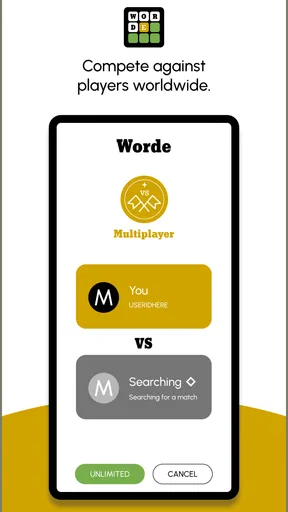
Multiplayer is potentially the most social part of the package, but it also changes what makes the game enjoyable. A solo round lets you think at your own pace. Playing with another person can add urgency, friendly competition, or a reason to return, yet it may be less appealing if you want a quiet puzzle with no pressure. I would recommend trying multiplayer after learning the basic rhythm alone, because understanding how the feedback works makes the competitive side less distracting.
Small habits that make the game more rewarding
The first tip I would give a new player is to use early guesses for information, not just for immediate success. A word containing several common, previously unused letters can tell you more than a guess that repeats letters you already understand. Once the board begins to show a pattern, switch from exploration to confirmation. That two-stage approach prevents many wasted turns.
Second, do not assume that a familiar-looking pattern has only one answer. Word puzzles often create several plausible possibilities, especially when a letter can appear more than once. Before committing to a guess, ask whether it tests an unresolved letter or merely confirms what you already suspect. This is particularly important in seven-letter rounds, where a near-complete pattern can still support multiple words.
Third, use unlimited mode as a learning space rather than a score chase. After a difficult round, take a moment to identify what went wrong: did the opening guesses overlap too much, did you overlook a repeated letter, or did you settle on a common word too early? That reflection turns extra rounds into practice. Without it, unlimited play can become quick guessing followed by quick restarting.
For a realistic everyday scenario, imagine having a short train ride with no interest in watching video. The daily puzzle can fill a few minutes without demanding a long commitment. If you arrive early and have more time, switch to unlimited mode. If a friend is nearby and both of you enjoy wordplay, multiplayer gives the session a social direction. That progression—from one quiet puzzle to repeated practice to shared play—is where the app’s combination of modes makes practical sense.
What may frustrate you
The biggest limitation is not the basic idea but the possibility of uneven personal fit. If you dislike word guessing, no amount of mode variety will make the central mechanic enjoyable. The game also depends heavily on vocabulary comfort. Someone who reads widely may find many rounds approachable, while someone learning English or playing outside their strongest language may encounter answers that feel arbitrary rather than challenging.
The free-to-install model also requires a little attention around purchases. Optional items can be useful for committed players, but I would not assume that paying automatically improves the core puzzle. The sensible test is whether the free experience already feels polished and replayable for you. If it does, you can keep playing without spending. If it does not, buying an item is unlikely to fix a mismatch with the game’s basic style.
Another trade-off is choice overload. Having daily, unlimited, six-letter, seven-letter, and multiplayer options is convenient, but it can make the app feel less focused than a minimalist daily puzzle. I see this as a strength for variety-seekers and a weakness for people who want one clear routine. If your ideal word game is a single carefully framed challenge each day, this may offer more than you need.
I would also avoid presenting the game as a replacement for a full language-learning tool. Playing it can encourage attention to spelling, patterns, and vocabulary, but the experience is built around solving words rather than teaching definitions or structured lessons. For deliberate language study, a dedicated learning app is the better option. Worde works best as an enjoyable supplement, especially when you want to think about words without turning the session into homework.
Who will get the most from it?
I think the strongest audience is made up of casual puzzle players who want more than one way to spend a few minutes. The daily mode supports routine, unlimited mode supports longer sessions, and multiplayer can make the game easier to share. People who already enjoy guessing games but sometimes want a break from a fixed daily limit should find the format especially appealing.
It is also a good fit for households looking for a simple, age-inclusive game. The Everyone rating keeps the entry barrier broad, and the rules are easy to explain. Still, I would play alongside younger users rather than assuming the age rating means every word will be equally accessible. The best family use is collaborative: discuss possible letters, compare strategies, and treat the result as a shared puzzle rather than a vocabulary contest.
I would be more cautious recommending it to someone who wants detailed progress tracking, formal instruction, or a highly curated single-player campaign. Those expectations point toward a different kind of app. Likewise, if you only want a once-a-day ritual and find unlimited options distracting, a dedicated daily alternative may feel cleaner.
The game has built a noticeable audience, with more than 500 thousand installs and an average rating of 4.3 from around 11 thousand ratings. Those figures suggest that the format has broad appeal, but they should not replace your own trial. Word games are personal: the same word length and vocabulary level that feels satisfying to one player can feel either too easy or unfair to another.
My recommendation after weighing the cost and trade-offs
I recommend trying Worde: Daily & Unlimited if you want a free entry point into a flexible word game and you like switching between short daily play and repeated rounds. Its most convincing value is not a single unusual mechanic; it is the combination of daily structure, unlimited practice, different word lengths, and multiplayer in one place. That combination makes it easier to fit into changing schedules than a daily-only alternative.
I would skip it if your priority is a distraction-free, single-puzzle routine, a crossword-style clue experience, or structured vocabulary education. I would also avoid spending immediately. Play the free version long enough to decide whether the word lengths, pacing, and available modes genuinely suit you. Optional purchases should be considered only after the unpaid experience has proved useful in your own routine.
My final view is positive but measured: this is a versatile casual word puzzle, not a complete language course or a substitute for every other word-game style. ViralMedia-MLM has packaged familiar guessing into a format that can work for a quick daily habit, a longer practice session, or a friendly match. For me, that flexibility is enough to make it worth installing, while the free access keeps the decision low-risk. The right way to approach it is simple: start with the daily round, use unlimited play to test your strategy, and only consider paid items if the game has earned a regular place in your day.
Verdict
Strengths of Worde: Daily & Unlimited
- Quick daily rounds fit easily into short breaks.
- Unlimited mode lets you keep playing after the daily puzzle.
- Simple interface makes the game easy to learn.
- Helpful feedback encourages strategic word choices.
- Suitable for casual players and word-game enthusiasts alike.
Limitations of Worde: Daily & Unlimited
- Some puzzles may feel repetitive after extended play.
- Unlimited mode can become challenging without varied difficulty levels.
- A missed daily puzzle may be frustrating for completion-focused players.
- Success depends heavily on familiarity with common English words.
- Frequent players may want more statistics and progress tracking.
Other Releases by ViralMedia-MLM
View All
Mini Golf Game - Putt Putt 3D
Sports4.2
Similar Picks in This Category
View All
Word Search - Word Puzzle Game
Bluetile4.8

Word Search Quest - Puzzles
Blackout Lab4.8

CodyCross: Crossword Puzzles
Fanatee, Inc.4.7

Words of Wonders: Crossword
Fugo Games4.9

Wordscapes: Word puzzle game
PeopleFun4.7

Word Search Explorer
PlaySimple Games4.9
Frequently Asked Questions
What is Worde: Daily & Unlimited?
Worde: Daily & Unlimited is a word puzzle game inspired by the popular five-letter guessing format. Each round challenges you to discover a hidden word within a limited number of attempts, using color clues to show which letters are correct or misplaced. It includes a daily puzzle for a shared challenge and unlimited modes for players who want to keep practicing throughout the day.
How does the gameplay work in Worde: Daily & Unlimited?
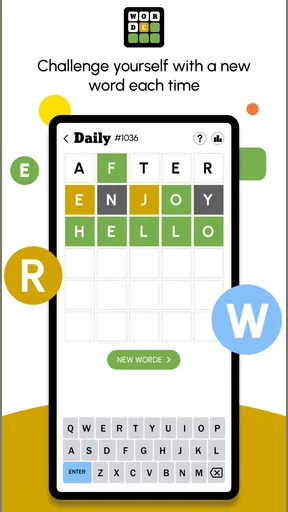
You enter a valid word and submit it to receive visual feedback. Correctly placed letters are normally highlighted differently from letters that appear in the word but belong elsewhere, while letters that are not included are marked separately. You use these clues to narrow down the possibilities before your attempts run out. The simple rules make it easy to start, although later puzzles can be surprisingly demanding.
Does Worde: Daily & Unlimited require an internet connection?
The daily challenge and some features may depend on an internet connection, particularly when the app needs to load new content, synchronize progress, or display rankings and sharing options. Depending on the version and device, certain unlimited puzzles may remain available offline after they have loaded. For the most reliable experience, it is best to open the app while connected and check its current permissions and offline behavior.
Is Worde: Daily & Unlimited free to download and play?
Worde: Daily & Unlimited is generally available as a free download, allowing users to try the core word puzzles without paying upfront. However, the app may include advertising, optional purchases, or premium features depending on the platform and release version. Before downloading, review the store listing for current information about ads, subscriptions, in-app purchases, and whether any modes or customization options are restricted.
Is Worde: Daily & Unlimited suitable for children and language learners?
The game can be useful for players who enjoy vocabulary challenges or want to practice recognizing English words, but its suitability depends on the player’s age and language level. Some answers may be uncommon, and the accepted word list can vary by version. Parents should check the app’s content rating, advertising, and privacy details, while language learners should treat it as a vocabulary aid rather than a complete language-learning course.
Play our best games!


